

am I the drama? exploring the complexities of morality through film.
a deep dive into the movie, The Drama (2026)

Last night, my fiancée and I spun our nightly movie wheel and turned on The Drama. I’m not a fan of romance films, but they promised me it wasn’t your typical Harry meets Sally.
As the film progressed, we chuckled at how I was similar to Zendaya’s character, Emma Harwood––a military brat always brooding, ideating, and using found footage to document the complexities of her mind. I paused the film midway saying, “is it just me or is everyone overreacting?”
After careful reflection, I realized that this film is more complex than meets the eye.
This is my deep dive of The Drama (2026), through the lens of a good girl gone bad.
warning: spoilers ahead.
the beginning
As Charlie crept behind Emma’s empty seat, sneaking a photo of her book, something unsettling brewed inside me. The quick search of the title, when she walked away is not only the couple’s first lie, but our first taste in what would become a complex tale of morality.
During the rumination of Charlie’s wedding vows, he and his friend Mike, discuss the couple’s first meeting. “I didn’t realize you doubled down,” Mike says, after learning Charlie lied about reading the same book as Emma in order to spark conversation. Awkward courting gesture? Or does it speak to something more sinister? After all, I couldn’t help but recall the opening scene––the uneasiness of a peculiar man forcing an impression of compatibility through lens of deceit. The lie compounded into their first date, when he continued to act as though he read the book until he couldn’t handle the amount of questions Emma asked of him. Later on in his courtship, there seems to be a question of whether the idea of their first kiss was intentional or not, “So he trapped you?" Rachel says, listening to Emma’s story of Charlie accidentally locking them inside a museum, setting off the alarm. All of it feels like a harmless build up into what is a natural progression of a steamy romance novel, but something unnerving settles beneath the surface.
the confession
When the friend group gathers for dinner and wine, the topic of conversation leads to the burning question of the film, “what’s the worst thing you’ve ever done?”.
Discussions flare up when they unpack the integrity of their wedding DJ who they caught doing drugs the other night. How far does one’s values stretch until it becomes a dealbreaker?
The key response comes from Mike, who up until then seems to serve as a neutral character mirroring everyone’s moral compass––”Doesn’t that say something about where she’s at in life?”. The question speaks to the progression of the film, do we account for what someone is going through to justify their actions, or do we write them off all-together because of what it says about their overall character as a human being? Is there a general line that we all follow as a society, or is it a grey area depending on the severity of the action at hand?
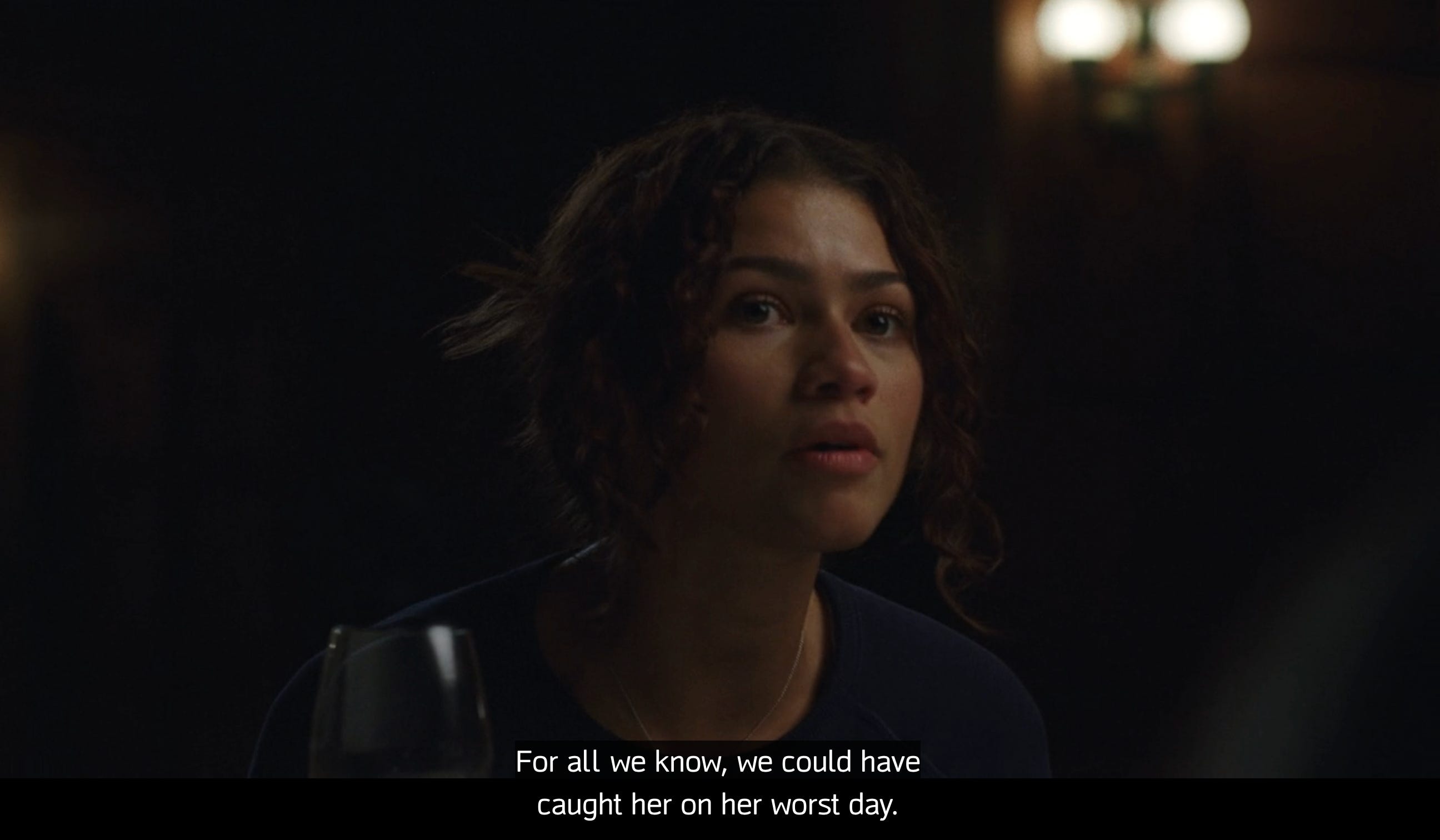
We then hear Mike’s confession, how he used his ex-girlfriend as a human shield on her birthday to avoid getting bit from a rabid dog. Rachel’s confession, an increasingly, questionable recount of a time she locked a fellow kid––who she believed to be challenged mentally—in a closet overnight, only to never tell a soul even with an active search party looking for him.
Stunned of the admission, Emma asks her what she would have done if he wasn’t found. She laughs, only to defect that she didn’t have to answer for something that didn’t happen. During Charlie’s turn, he eerily confesses that at 14 years old he cyber-bullied a kid so badly that the victim’s entire family moved.
An interesting foreshadowing happens at this moment. Mike declared that Charlie’s frontal lobe wasn’t fully developed at 14 years old to take accountability for his actions. Something that the audience will grapple with for the rest of the film.
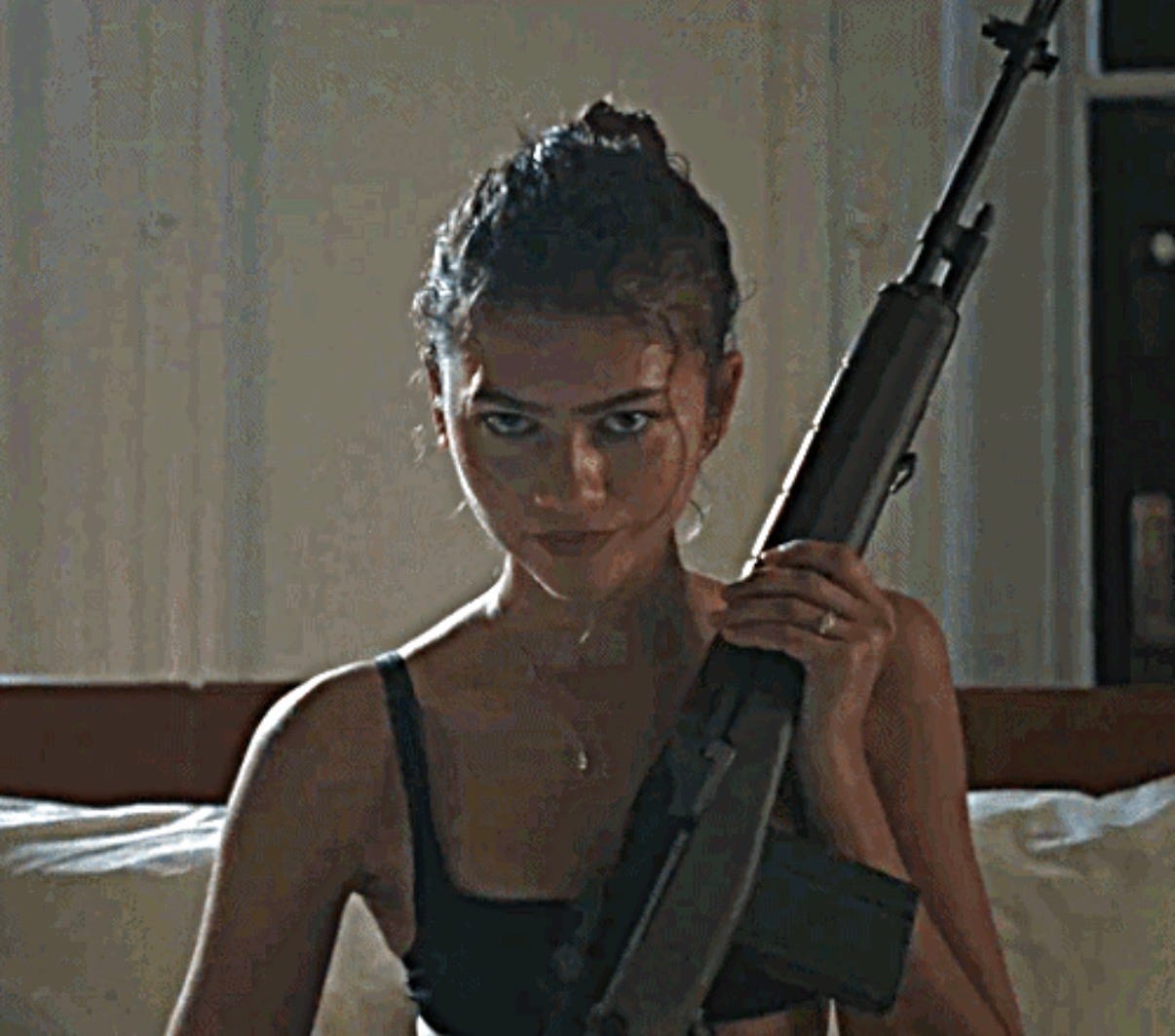
We arrive at the crux of the story, Emma’s confession. Through years of bullying and absent parents, she begins to ideate on committing a mass demise of her school, including a few specific classmates. She goes as far as to play around with her dad’s rifle after school, target practicing, filming her manifesto, and even bringing a weapon to school. Her only reasoning for not going through with it was someone beat her to it, committing the act a nearby mall and striking a classmate.
She grapples with her conceptualization, seeing the effect it has on her classmates. Was she ever going to do it? That we don’t know, but the actions leading up to it paint the picture of what could have been.
This is when the breakdown happens. Emma is shamed by Rachel and paranoia buries into Charlie’s conscious, realizing the story of her deaf ear had been fabricated. Ironically, he fears their entire relationship is built on a lie.
Mike tries to calm Charlie down, days later, saying he would call the police and beat Emma up if he wanted him to––an interesting response considering we’re reflecting on a past child’s thoughts.
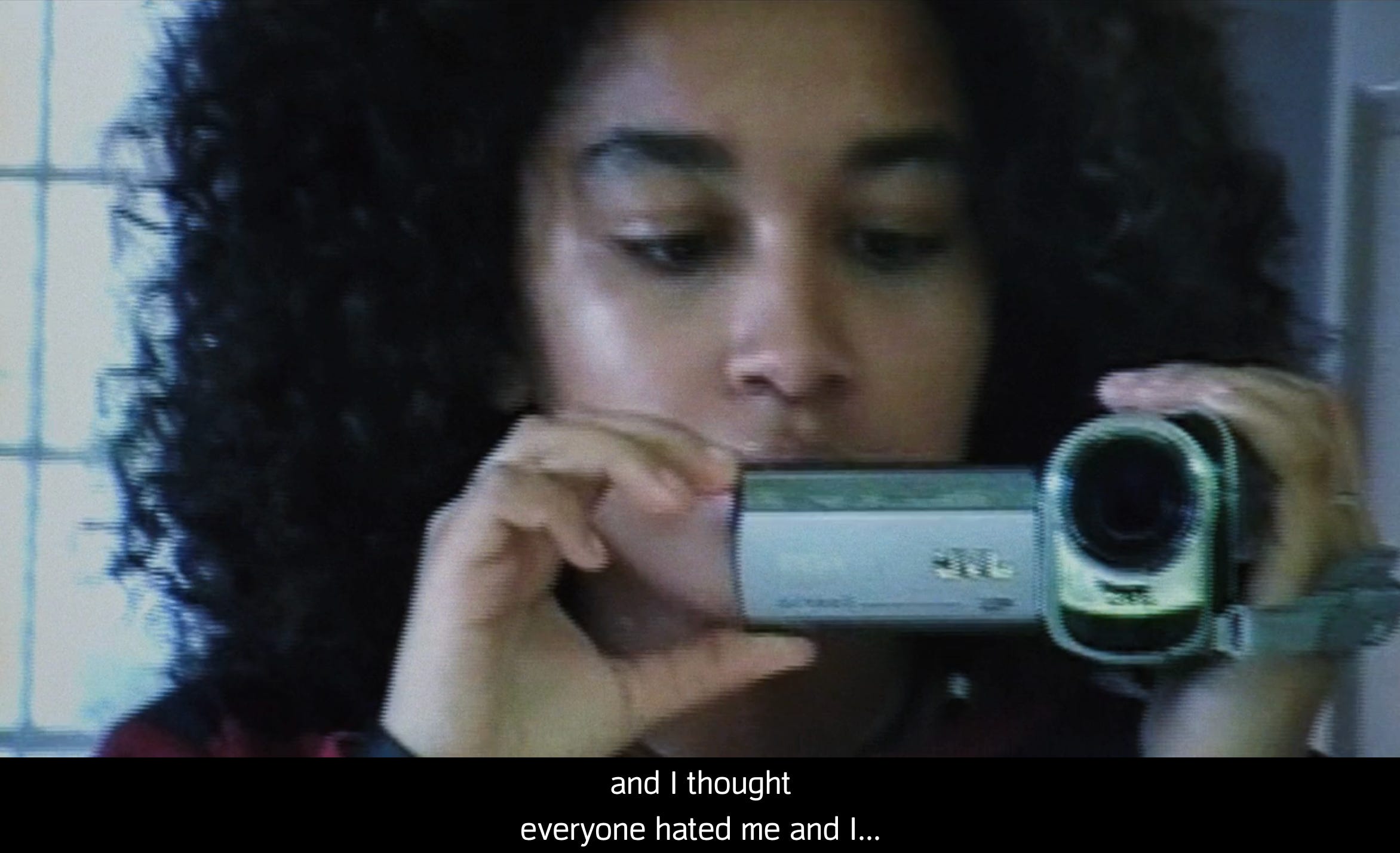
The following scenes paint a haunting insight into the gravity of Emma’s ideation. The audience gets a detailed point-of-view of her afternoons at home toying with her dad’s rifle. What we don’t see, is the detailed perspective of the other kid’s transgressions. Mike’s girlfriend’s harrowing screams as he uses her as a human shield. The panic set in by the kid who got locked in a closet––the view of Rachel’s detachment while performing the act. The unseen words of Charlie that drove paranoia through an entire family, forcing them to move.
It all begs the question: if we would have received the same detailed perspective through each person’s misconduct, would the film truly be about Emma or would it be about the overall mental health crisis in children around the world?
After the mall tragedy, discussions around the school speak to the rage-fueled actions of men versus women––is it possible for femmes to feel the same level of anger let alone go through with unspeakable acts?
Exercises, led by teachers, force the students to interact, confronting each other’s emotions without words. Here, is where we see the essence of young Emma’s grief, an isolated biracial child in a small town in Louisiana. Was she a product of her environment or was she just in need of a friend? When a fellow student asks her to join a gun control program, she bashfully agrees.
During Emma’s retelling of her childhood, Charlie mentions the film Lacombe, Lucien, by Louis Malle, making the possible connection of rejection as a gateway to violent acts and ideas.
With a group of kids now accepting young Emma into their inner circle, combatting gun violence, her entire world changes––she becomes an activist and subsequently tosses her dad’s rifle in a nearby swamp. Charlie asks if she felt like a fraud during this time, after all, she was planning a mass shooting just weeks before.
Emma responds, "No, it felt like finally waking up from a bad dream.” She insists her violent urges came to an end with the invitation of human connection.
“Freud said something like, the feelings that we don’t talk about get buried alive, only to come out in uglier ways.” –– Charlie, in The Drama.


the wedding
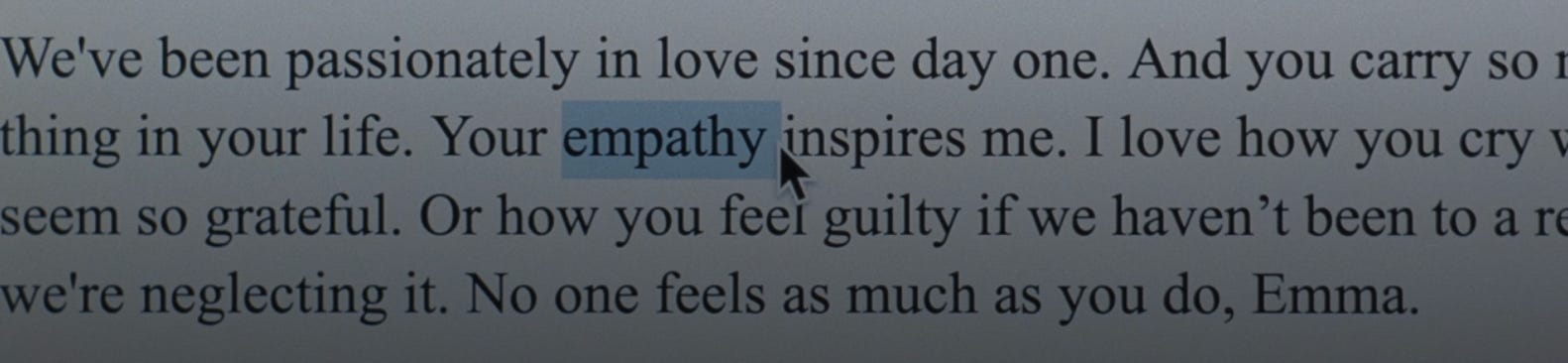
Questioning his fiancée’s character, Charlie begins to rewrite his vows, removing words like empathy and kindness to describe Emma.
He throws away his mug that says Coffee or I’ll Shoot; he jumps at the thought of Emma wielding a knife, even if only to cut produce for a smoothie. His libido plummets as he digs inside Emma’s psyche, probing questions that could only lead to an explanation of her teenage mindset. Yet and still, the question never redirects into what led Charlie into cyber-bulling someone at the same age.
Charlie goes into a spiral, an unsettling feeling similar to the beginning of the film. He corners Rachel’s handicapped sister on a corner––blocking her wheelchair to coerce her into changing her judgements of Emma. He makes sexual advances toward his coworker Misha, who states he misread her signals of compassion.
The complexities of morality begin to spindle into a web of paradox. The couple questions their DJ’s drug use, firing her days before the wedding. Rachel makes an impertinent speech in front of all the guests. Talks of Emma’s childhood makes rounds around the party. Blake, Misha’s boyfriend, head-butts Charlie after learning about the incident at work.
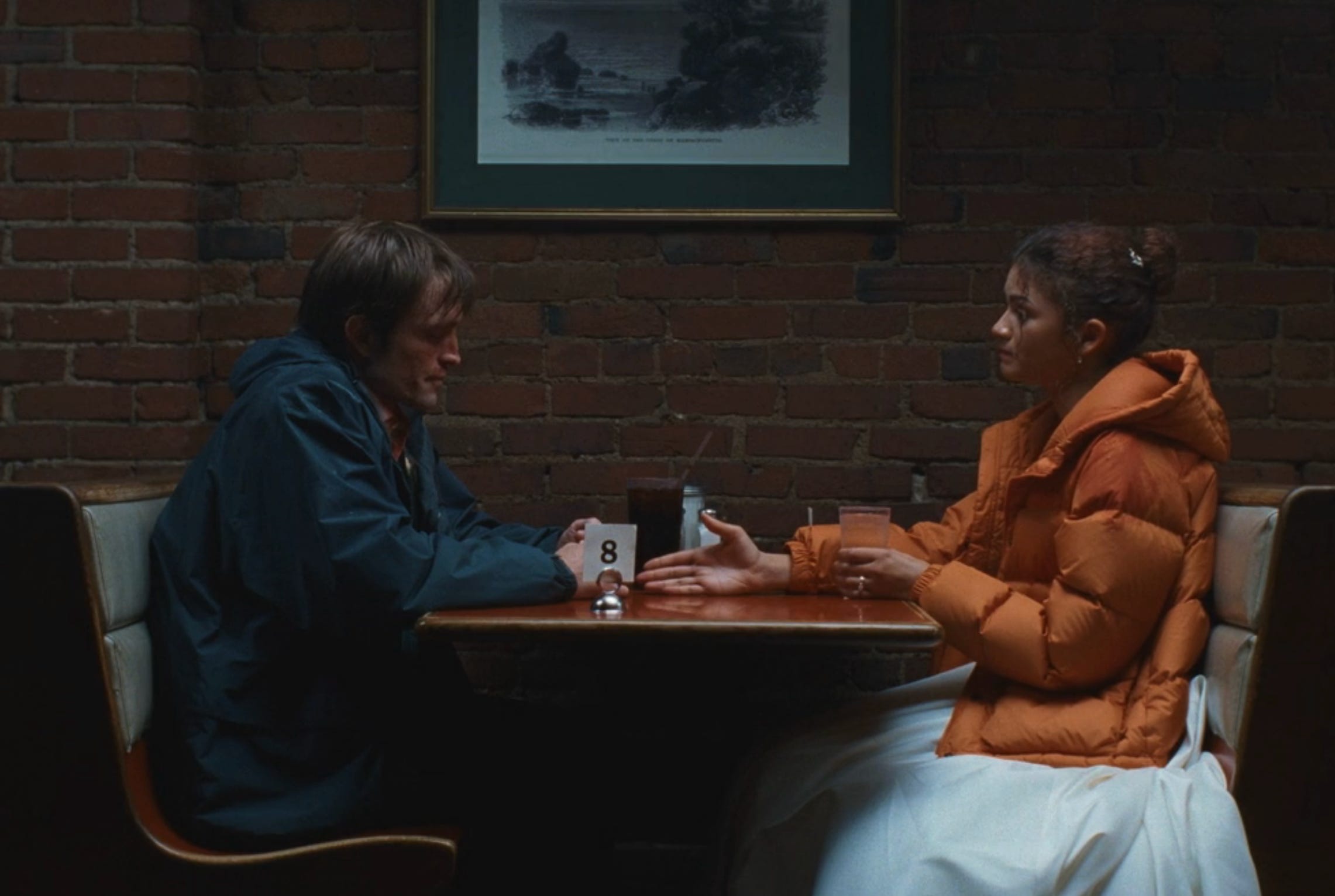
In the end, “the drama” is an entanglement of deceit and decisions. How we become the judge, jury, and executioner of everyone’s thoughts and actions, while also serving as the offender in other’s lives. Is the line of morality a standard we all abide by, or is it the byproduct of one’s own values and life experiences?
A question that will stand the test of time.
I interpreted the scene between Mark and Charlie differently. I saw that as Emma worrying about worse case scenario since Charlie wasn’t there when she woke up.
I thought I was the only one to have such views about the movie, you articulated my thoughts better than I could ever have. I'm so glad I found this article
ps: yes I also thought they were actually overreacting a bit.